The Attention Economy Doesn't Play By Your Rules Anymore: A New FASTMaster Special Report
A preview of FASTMaster Intelligence's new report on how to evolve content for the Gen Z era.
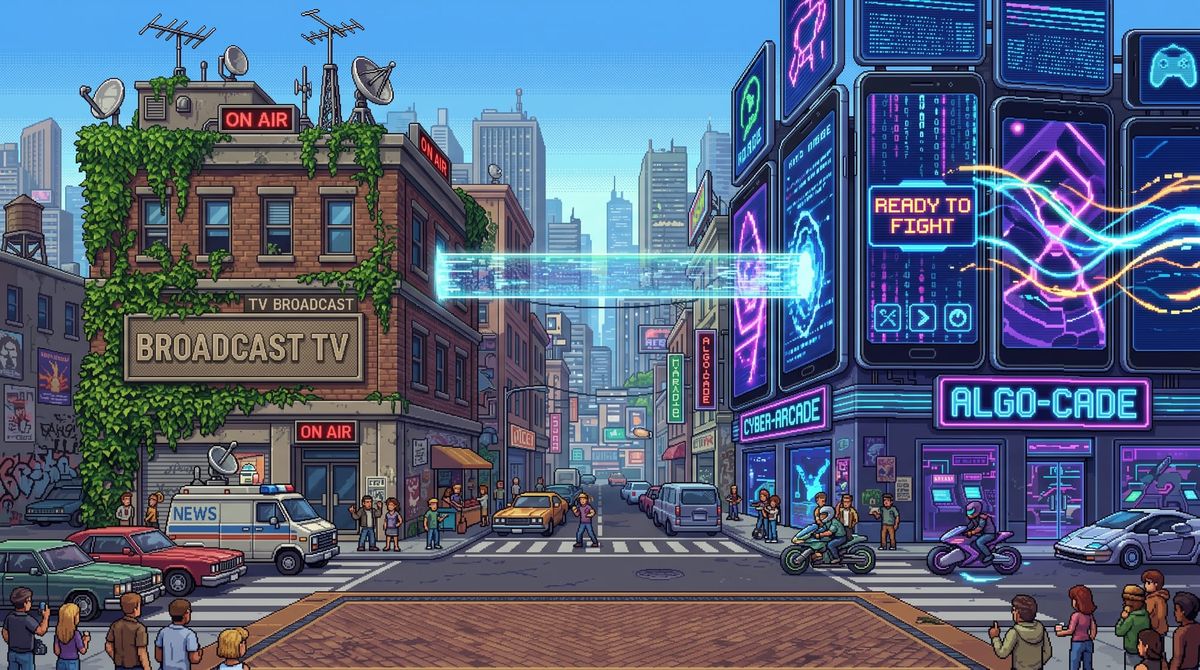
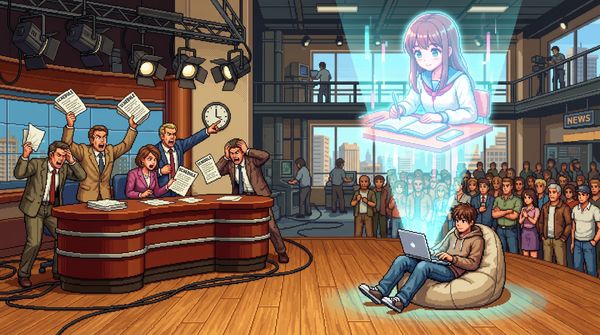
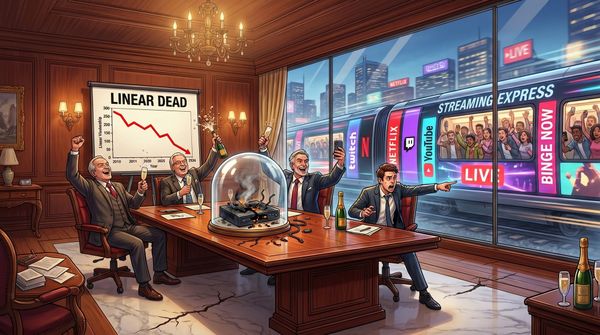
For a decade, the media industry has misdiagnosed its own patient. Executives watched Gen Z abandon cable, ignore network grids, and scroll past prestige dramas, and concluded that young audiences had simply rejected linear television. They were wrong. Gen Z didn't kill linear — they switched networks, from ABC, NBC, and CBS to YouTube, TikTok, and the algorithmic feed.
That reframing is the spine of How to Evolve Content for the Gen Z Attention Economy, the new 50-page intelligence report from the FASTMaster. It's a strategic field manual for anyone still trying to win the living room — studios, streamers, FAST operators, OEMs, and media buyers — built around a single premise: we are no longer competing for time slots, we are competing for neurological engagement.
A summary video for those who prefer audio previews to text
What's inside
The report moves through eight sections that build on each other. It opens by dismantling the myth of the loyal viewer and introducing the "mercenary viewer" who now juggles 16-plus entertainment sources. It then makes the mathematical case against the "everything app," showing why the $15.25 trillion Millennial comfort economy and the $12 trillion Gen Z "treat economy" demand fundamentally opposing products. From there, it documents the living room hijack already in progress — YouTube now commands 12.7% of total U.S. TV viewing, dwarfing Netflix (8.4%) and every legacy network — before burying the legacy EPG and proposing a replacement: a "Vibe Taxonomy" that organizes programming by mood and context rather than genre (Main Stage, Arcade, 3AM Lore, AFK/Dual-Stim, The Soapbox, and more).
The back half gets operational. A repackaging engine shows how to dismantle dormant 44-minute episodes using human-in-the-loop AI and convert $5–$15 FAST CPMs into $25–$40+ premium youth inventory. A full section is dedicated to YouTube Stations — the one-click tool that turns any playlist into a 24/7 linear channel — and the narrow structural window legacy platforms still have to exploit cross-IP curation before that door closes. The closing Executive Mandate distills everything into three pillars: unbundle your audience, destroy the episode to save the network, and stop waiting for viewers to come to you.
Why it's worth the read
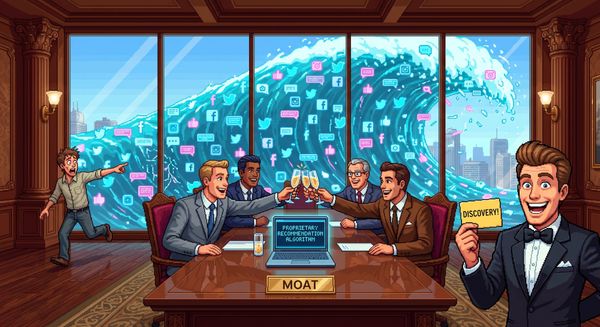
The statistics are aggressive — 71% of Gen Z report exhaustion trying to choose what to watch, 38% watch zero live traditional television, 60% discover premium shows through fragmented social clips rather than platform homepages — but the real value is in the reframes. The "8-second attention span" isn't an attention span; it's an evaluation filter, and Gen Z will binge for hours once content clears it. The search-and-select UX isn't a feature; it's a search tax that's driving subscription churn. The 44-minute episode isn't prestige; it's a barrier to entry in a feed-first world.
If you're still building for the old living room — rigid grids, genre silos, premium tiers, standalone apps — this report tells you why that product will be scrolled past, and what to build instead. It's long, but it earns the length. Nothing else takes into account research as deeply as this, building a narrative with context leaning into behavior, economics, and more. Block out an afternoon.