The TV Networks That Will Be Dropped in 2026 (And Why)
The "Kill List" is not a theory; it is already happening. I analyze the specific TV networks most at risk of being dropped by MVPDs in 2026. Find out which channels are "Ghosts" and which are "Zombies" in the new media economy.

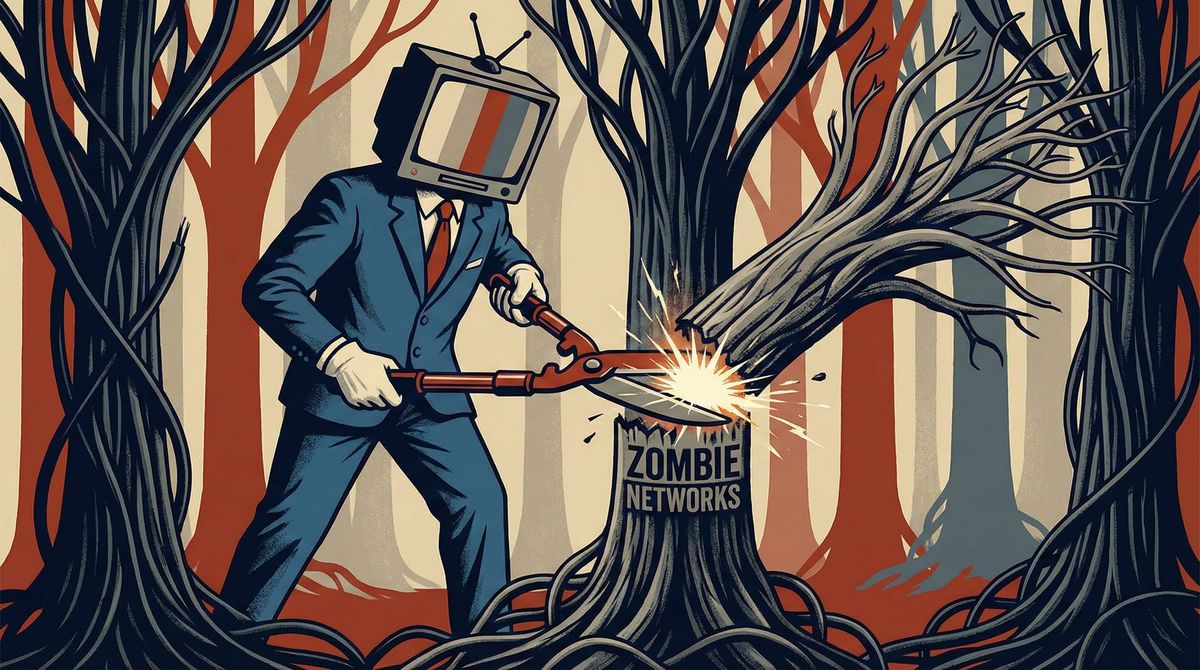
The "Charter Model" has changed the rules. These networks are no longer assets to cable; they are liabilities waiting to be cut.
[This is part two of my analysis on the state of linear TV. You can find part 1, which introduces the Vitality Index and highlights the 12 networks with a pulse, here. To those of you new here, welcome! I have curated my FASTMaster Substack audience into a select group of media professionals who I think will enjoy the wider scale and analysis that FASTMaster Intelligence seeks to bring. I hope you enjoy.]
For 20 years, cable ran on the “Big Bundle” model: Distributors were forced to buy multiple channels they didn’t want to get the one they did (ESPN).
That era ended in September 2023. The law of the land, forced upon cable networks by Charter, is Hard Bundling. MVPDs will now trade volume for value. They will happily drop Zombie linear channels in exchange for getting the programmer’s Streaming App included for free, in a last-ditch attempt to preserve some value in the cable bundle and stem the flood of cord-cutting.
(This also has implications for the growth of online platforms that sell SVODs direct to consumers (such as Roku Channel and Prime Video): if cable consumers get their SVODs for free, they won’t sign up for them via a Channels business and give that platform a cut of the fee).
The Scorecard: How the War Has Already Been Won
A history of recent carriage disputes proves the “Kill List” is not a theory - it is already happening.
(1) Disney vs. Charter (Sep 2023): Disney wanted higher fees for all 27 channels. The Pivot: Charter dropped 8 networks (Freeform, Disney XD, etc.) in exchange for Disney+ included free.
(2) YouTube TV vs. RSNs (Feb 2024): SNY (Mets) and other RSNs wanted carriage on the base tier. The Drop: YouTube TV permanently dropped SNY, proving they don't need local sports to keep growing.
(3) WBD vs. Fubo (May 2024): WBD demanded Fubo carry the "Big Bundle" (HGTV/Food) to get Turner Sports. The Blackout: Fubo refused the bloat and dropped all WBD networks (Discovery, HGTV, TLC), choosing to go "Turner-less" rather than overpay for Zombies.
(4) Disney vs. DirecTV (Sep 2024): Disney wanted to force the "Fat Bundle," i.e., pay for Disney XD to get ESPN. The Flex: DirecTV won the right to sell "Skinny Bundles" (Sports Packs without the fluff).
(5) WBD vs. Comcast (Dec 2024): WBD wanted renewals for TNT/Discovery. The Trade: Comcast kept the channels but forced WBD to include Max (Ad-Lite) for free to cable subs.
(6) NBCUniversal vs. Fubo (Nov 2025): NBCU wanted a multi-year deal for Versant channels (USA, Syfy, MS Now) before they spun off. The Rejection: Fubo blacked out the entire NBCU portfolio, refusing to sign a long-term deal for "Zombie" assets that are being spun off into a weaker company.
The list illustrates how there are three key battles being fought by providers against TV network distributors: (1) maintaining value by dropping channels no-one watches but everyone pays for to get high-value apps bundled in; (2) to be able to offer Skinny Bundles; (3) to remove the bloat and keep prices fixed as they are. As we can see, pruning networks has been underway for over two years, but I anticipate it to ratchet up.
So who is likely on the block? We can divide this into two broad groups (with sub-groups within) of Ghosts and Zombies. First, the Ghost networks most at risk, which frankly are any network with less averaging 30,000 or less viewers in primetime (bearing in mind this factors in delayed viewing too… it’s staggering these currently operate as these are beyond niche).
First, let’s focus on the ghosts that used to be alive. There’s four channels on this list who in happier times pulled in 1.1 million viewers cumulatively in primetime: Destination America, American Heroes (both WBD), Disney XD and Teennick. Nowadays, they pull in a cumulative 95k - a decline from 2014-2025 of 91%. The WBD networks have been gutted of original programming under Zaslav’s mania to pay off WBD’s debt and are nothing but glorified FAST channels at this point, whilst Disney XD and Teennick are misnomers in today’s world because teens don’t watch cable.
You cut these, you save close to a dollar in carriage fees per month per subscriber. Seems insignificant, but if you go with MoffetNathanson’s Q3 2025 estimates of Pay TV Households (65 million) and factor in tiering, that’s around $40million in combined revenue lost/month for the providers. The simple question is: are these channels worth that cost? Comcast alone is paying at least $4 million per month for these four channels that are dead-weight in today’s world.
Then we move into the realm of the never-haves. These are networks that even at the height of cable didn’t see large audiences but have cratered since.
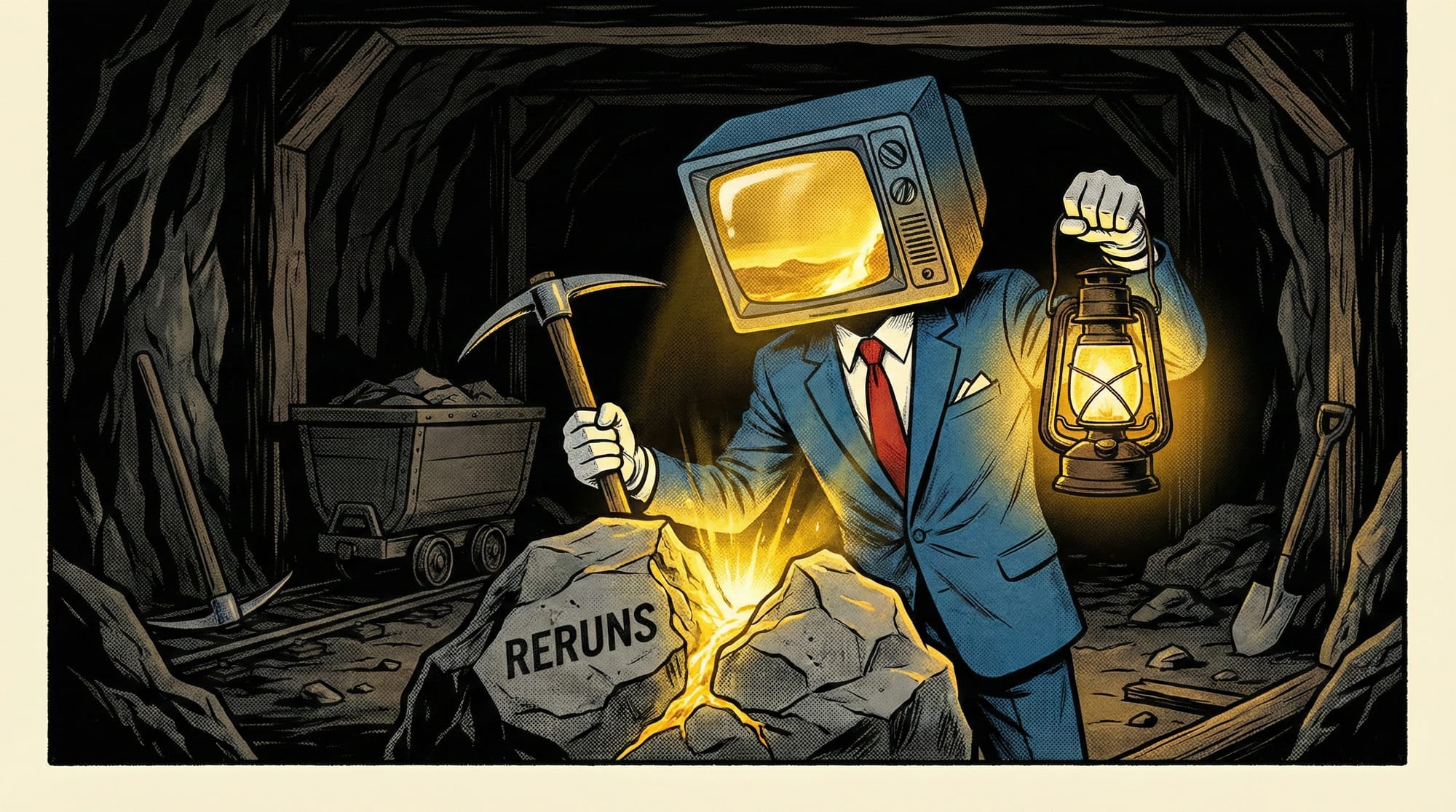
These comprise networks that are nothing but reruns (Boomerang, MTV2, Discovery Family, Discovery Life, Logo), ones who were always niche (Fuse, Comedy TV, AXS TV - especially since its TNA wrestling hook has moved to AMC - and niche sports rights like BeIN and FS2), and ones who were questionable to have even launched (Merit Street, although its poor performance sheds interesting light upon FAST services who chose to spotlight the Dr. Phil channel… hardly a thumb on the pulse of pop culture). Cutting these would save providers over a half a billion dollars a year, but these are just the bottom of the barrel targets.
I anticipate these networks, including former cable workhorses like BBC America and Travel Channel to dominate negotiations with Pay TV execs come renewal time. It’s not hard to see why. Their audiences have cratered and in most cases their original output has also severely fallen. The kids/teen-focused channels are trying to reach an audience who’s no longer there, and would work better as themed programming blocks on Nickelodeon/Disney Channel and as tiles on their respective streaming services. Bluey might be the number one show on streaming, but its linear home of Disney Junior does not share in that love.
The WBD channels on the list have been gutted of original content. Travel in 2020 had 22 original series, Science 15, and HLN 7. These fell respectively in 2025 to 1, 2, and 0. With shrinking audiences, what value do these offer an MVPD? It’s not like anyone would cancel their cable service over Science being dropped. Instead, these networks should pivot to the formats where their branding will still be valuable and reruns are welcome, namely diginets and FAST, which would preserve ad revenue to a degree and help protect the bigger networks on the portfolio from avoiding a prolonged blackout (see my earlier table and how Fubo wages war on the network groups as a precursor).
CMT was once a cultural paragon for country music culture, but its award show was moved to CBS, the CMT specials (Crossroads, Sessions) went on hiatus in 2025, and CMT Hot 20 Countdown ended in December. It’s not a priority for Paramount and should be moved to a programming block on Paramount Network and tile on Paramount+. BBC America was once the home to original, award-winning content (7 original series in 2020), which has dropped to 1 in 2025. If I’m an MVPD exec, my question is what value does it offer customers now it is mostly AMC simulcasts? I do believe though that of all the networks on the bigger brands kill list, BBC America could escape it if it realizes more synergy with BritBox and AcornTV to position itself as a niche stronghold on cable and away from being a zombie network.
Perhaps key here is that trimming the networks on the list would save roughly a billion dollars a year in carriage payments, which is a substantial figure for networks without big audiences or fresh content. Creating leaner cable TV bundles, coupled with SVOD services bundled in, will be a key trend in 2026-27. There will be blackouts. There will be blood. But most of all, there will be change.
(Join me next time as we examine which TV networks offer hidden value to advertisers)