The Gen Z Translation Guide: 6 Massive Video Formats Legacy Media Ignores
Gen Z doesn't have a fried attention span; their brains simply demand multi-layered sensory stimulation. From Sludge Content and Lore Dumps to Reacts and Fancams, discover the six hyper-kinetic video formats dominating youth watch time and learn how legacy media can weaponize them to win back CTV.
We know nothing about how Gen Zs consume media, and it's time to admit it. Here are 6 genres they love that the legacy entertainment industry completely ignores.
The Attention Span Myth
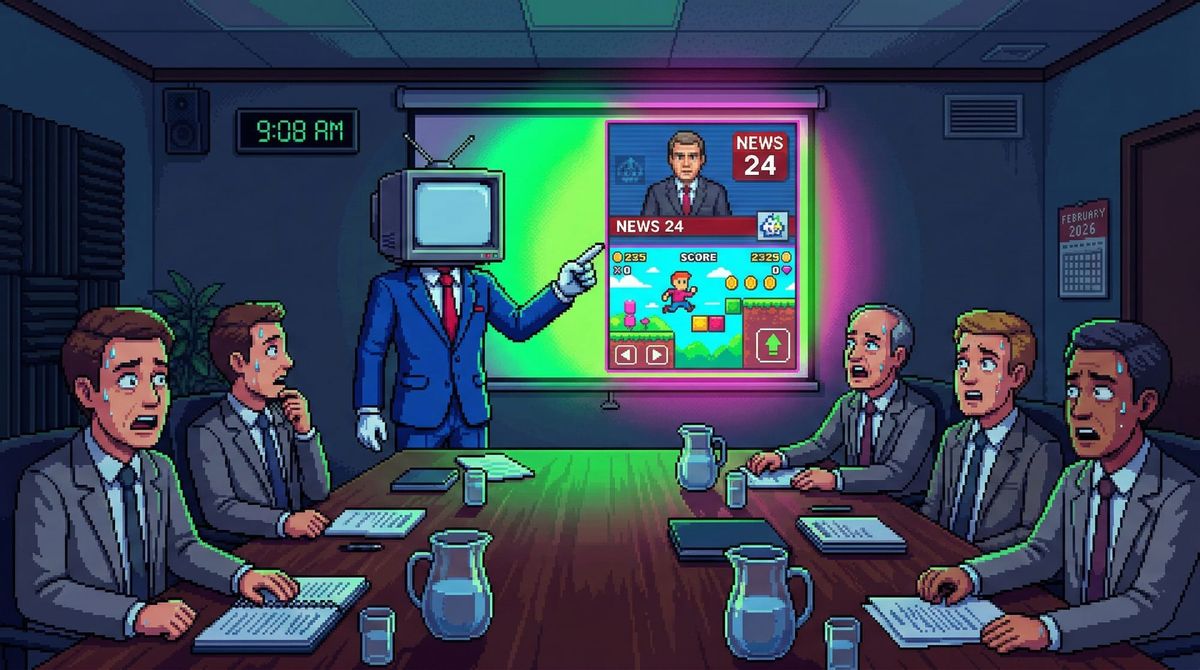
Walk into any legacy media boardroom today, and you'll hear the same tired excuse for declining viewership: "Gen Z just has a fried attention span. They can't watch real television."
We need to kill that myth. Gen Z’s attention span isn't broken; it has evolved to defend itself against algorithmic boredom.
Legacy television demands singular, linear attention. Gen Z’s brain chemistry, shaped by a decade of multi-screen scrolling, demands multi-layered sensory stimulation. They will happily cast a four-hour video essay dissecting a failed theme park to their living room TV, but if you serve them a slow-paced network procedural, they look down at their phones, and you lose the ad impression.
To win this demographic, you have to stop broadcasting at them and start building digital environments around them. Here is the executive translation guide to the hyper-kinetic formats that actually dominate youth watch time, the creators driving them, and how to weaponize them for your platform.
1. Sludge Content (Dual-Stimulus Video)
What it is:
A vertically split screen. The top half plays the primary narrative, like a podcast interview or a TV show clip. The bottom half features totally unrelated, silent, kinetic gameplay—someone slicing kinetic sand, playing Subway Surfers, or doing car stunts in GTA V.
The Data & Scale:
The hashtags for #SubwaySurfers and #KineticSand have generated tens of billions of views. This format routinely traps viewers for 5-to-10 minute completion rates on platforms explicitly built for 15-second swipes. It is the engine of the overstimulation economy.
Who is Doing It:
Massive faceless Reddit story accounts (like @reddit_stories) use Text-to-Speech to read dramatic user confessions over Minecraft parkour. You will also see this heavily used by pirate accounts uploading Family Guy or South Park clips, using the gameplay to pacify the viewer while simultaneously confusing copyright-strike AI.
The Play:
Executives are often offended by this format, but it is a highly lucrative retention hack. On a youth-targeted streaming app, build a "Companion Mode" UI toggle. Let the viewer watch a stand-up special on the main screen while a silent loop of satisfying ASMR plays on the side. Watch your session times skyrocket.
2. React Content (Parasocial Co-Viewing)
What it is:
A creator puts themselves in a small corner box while they watch a movie trailer, viral video, or legacy TV show, pausing frequently to scream, laugh, or argue with a hyperactive live chat.
The Data & Scale:
The "Just Chatting" category on Twitch—which consists almost entirely of creators reacting to other people's videos—is consistently the #1 most-watched category on the platform, pulling billions of hours of watch time annually.
Who is Doing It:
Kai Cenat and xQc run this economy, drawing tens of thousands of live viewers without writing a single script. MoistCr1TiKaL (Penguinz0) built a massive YouTube empire primarily through deadpan reactions to internet drama and bizarre reality TV shows. HasanAbi pulls massive concurrent viewership for 8 hours a day just reacting to political news broadcasts. They simulate sitting on a couch with a loud, funny friend.
The Play:
This is how you monetize dead legacy IP. If you want a younger demographic to watch a 2005 episode of Kitchen Nightmares or Wipeout, do not just air it raw. License a mid-tier digital creator to record a visible "React Track" and overlay it onto the footage. You instantly transform a $5 CPM zombie show into a high-engagement communal event.
3. The Lore Dump (The Mega-Essay)
What it is:
A massive, feature-length video (often 2 to 5 hours long) featuring a creator obsessively explaining the complete history of a hyper-niche topic.
The Data & Scale:
YouTube data consistently shows long-form content is driving massive Connected TV (CTV) viewership. This format completely destroys the "short attention span" myth. They view hyper-niche "Internet Lore" as actual history and consume these multi-hour mega-essays as background companionship.
Who is Doing It:
Wendigoon routinely pulls 5M+ views on 2-hour deep dives into internet mysteries. Jenny Nicholson broke the internet with a 4-hour, forensic breakdown of the failed Star Wars: Galactic Starcruiser hotel that functioned as a masterclass in consumer reporting. Hbomberguy released a 4-hour essay on YouTube plagiarism that generated mainstream news coverage. Quinton Reviews makes 5-hour retrospectives on Nickelodeon sitcoms like iCarly that trend #1 globally.
The Play:
You don't need to spend $10 million producing a slick documentary. License these 3-hour video essays and run them uncut on your FAST channel’s late-night programming blocks. Advertisers love them because the average session time dwarfs traditional television. (Or license my own lore dump on WW1 told via rubber hose images. It's worth a view).
4. Asymmetrical Storytelling (GRWM / True Crime & Makeup)
What it is:
A creator performs a mundane physical task—like a 15-step makeup routine ("Get Ready With Me") or cooking a meal—while simultaneously narrating a chaotic, dramatic story that has absolutely nothing to do with their actions on screen.
The Data & Scale:
The #GRWM hashtag has crossed well over 150 billion views. It has completely transcended beauty tutorials and become the primary vlogging and storytelling format for the internet. Watching someone perform a physical task drops the viewer's defenses, simulating the intimacy of a FaceTime call.
Who is Doing It:
Alix Earle is the undisputed queen of this format, telling chaotic college stories while doing her makeup. Her casual authenticity is so powerful that any product she uses instantly sells out globally. Bailey Sarian pioneered a darker spin on this with her massive "Murder, Mystery & Makeup" series on YouTube, casually detailing horrific true crime cases while blending eyeshadow.
The Play:
High production value is a liability here. Furthermore, this is the ultimate Shoppable TV vehicle. When the creator casually uses a specific moisturizer while telling a story, your UI should be flashing a seamless, 1-click purchase button.
5. Fancams and Velocity Edits (The Hype Engine)
What it is:
15-to-30 second, hyper-edited, aggressively color-graded montages focusing purely on the aesthetic of a single character, transitioning perfectly to the heavy bass of Phonk music or sped-up pop.
The Data & Scale:
Fancams literally chart music. Speeding up a song for a TikTok character edit is so powerful that major labels now officially release "Sped Up" versions of tracks on Spotify to capture the royalties.
Who is Doing It:
The fans. Originating in K-Pop stan culture, this has fully infected mainstream Hollywood. User-generated edits of Pedro Pascal drove his massive internet dominance. Fancams of Stranger Things characters single-handedly pushed Kate Bush's "Running Up That Hill" to the top of the global charts decades after its release. If a character doesn't have fancams, the show does not exist to Gen Z.
The Play:
This is your ad-break savior. Instead of running three minutes of boring pharmaceutical commercials that trigger an immediate channel change, intersperse 60-second blocks of user-generated "Phonk Edits" of the characters in the show they are currently watching. Keep their adrenaline up during the ad break.
6. Brain Rot and Corecore (Digital Dadaism)
What it is:
Aggressively loud, context-free memes featuring distorted audio ("Brain Rot"), or melancholic super-cuts of sad movie scenes and news clips set to slowed-down indie songs ("Corecore").
The Data & Scale:
"Skibidi Toilet," the pinnacle of Gen Z Brain Rot, is a surreal animated web series that generated tens of billions of views, becoming one of the fastest-growing channels in internet history and spawning massive physical merchandising lines.
Who is Doing It:
DaFuq!?Boom! drives the Brain Rot economy. For Corecore, aesthetic creators stitch together clips of Ryan Gosling in Blade Runner 2049, vintage news broadcasts, and melancholic music to create a pure "vibe." Savvy brands like Duolingo and Wendy's have actively co-opted this unhinged tone for their own corporate TikTok accounts to massive success.
The Play:
You cannot program a 22-minute show like this, but you absolutely must adopt its pacing. Fire your legacy promo department. Pay 19-year-old TikTok editors $500 to make chaotic, aesthetic "vibe edits" of the shows on your network, and run those as your commercial bumpers.
The Bottom Line
Legacy media evaluates content based on Production Value—lighting, scripts, and sets. Gen Z evaluates content based on Stimulation Value and Authenticity.
If a show costs $10 million an episode but has slow pacing and forced dialogue, Gen Z will label it 'mid' and skip it. If a video costs $0 to make but features split-screen gameplay and a guy screaming at a video game, they will watch it for 3 hours.
Stop complaining about their attention spans, and start programming for the reality of their screens.