The Creator Economy’s “TV” Problem
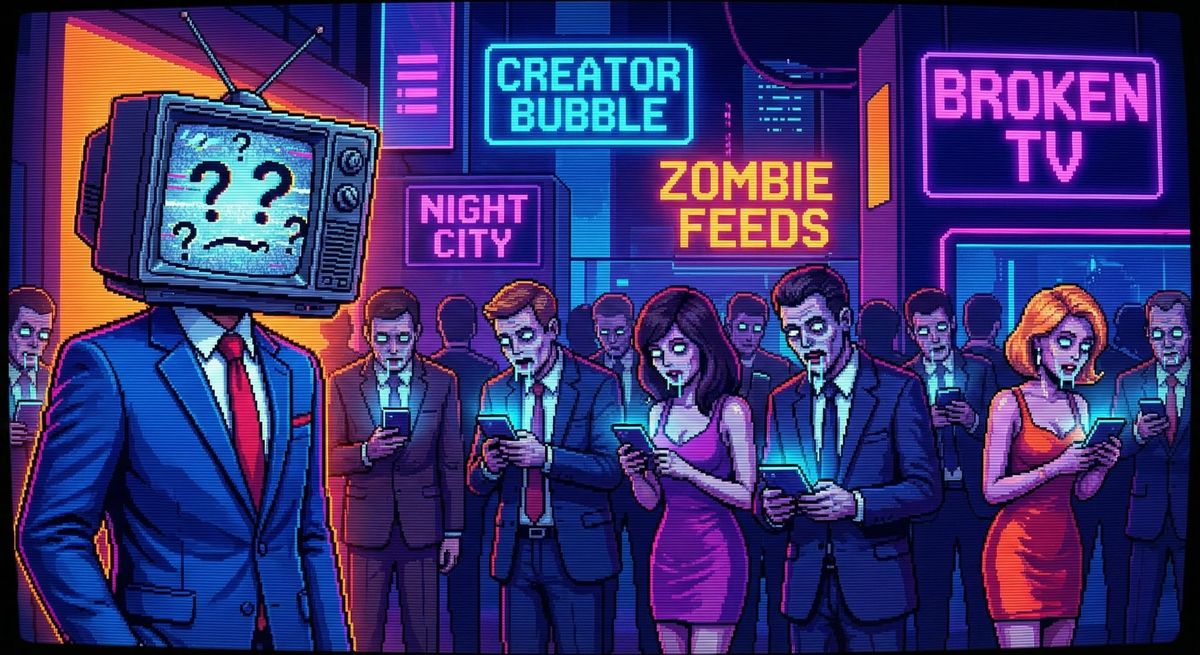
Creator FAST channels have exploded 145% since 2024, but platforms are building zombie feeds. By forcing Gen Z into 1999-style grids and stripping away interactivity, they’ve created a passive archive, not a destination. To fix this, the EPG must die and "Live" must become real.
The Creator Gold Rush is here, but the infrastructure is broken. While the industry pats itself on the back for "bridging the gap" between YouTube and the living room, the data suggests a more chaotic reality. We are witnessing a desperate landgrab—a 145% explosion in channel volume since 2024—but the execution on the platform side threatens to alienate the very demographic (Gen Z/Alpha) they are trying to court.
Creator-based FAST channels have exploded tenfold in just six years. While growth historically doubled every two years, the 2024–2026 window saw volume nearly triple. Platforms are panic-buying content to stay relevant to younger audiences and attractive to advertisers.
This demand has sparked an exclusivity war. While Prime Video leads in total volume, Samsung is playing a different game: acting as a Studio/Network. By commissioning exclusive episodes (like Dhar Mann’s), Samsung is building a prestige walled garden, whereas Amazon is largely aggregating existing content.
The shift toward exclusivity for so many of these creator channels is fascinating, as it directly counters their native YouTube business models. YouTube is about scale and ubiquity. On FAST, many creators are trading that in—often for an upfront payday—effectively limiting their organic growth in the living room. Realistically, very few people are buying a specific brand of TV just because a creator’s linear channel is exclusive to it.
So, who is the 'New Hollywood' vying for eyeballs alongside the legacy giants? Studio71 takes the top spot by volume, fueled by its heavy carriage on Amazon. The Samsung Creator Collective follows, leveraging its fortress of exclusives. Radial Entertainment ranks third—a powerhouse formed by the merger of FilmRise and Shout! Studios—capitalizing on FilmRise’s early identification of the market's potential and securing library deals with digital-first giants like Hot Ones and Preston Arsement. Moving forward, we can expect more FAST platforms to follow suit and execute direct deals with top-tier talent.
But will this be enough to attract Gen Zs to FAST?
The biggest issue preventing this is the legacy DNA of the platforms themselves. Prioritizing local news or broadcast TV hits from 25 years ago hardly screams relevancy to a younger audience. If a Gen Z user stumbles onto a FAST service, the immediate impression isn't "this is for me"—it's "this is for my parents." The discovery mechanism alone feels archaic; we are asking a generation trained on instant, algorithmic personalization to hunt for gold buried inside a grid of hundreds of linear channels.
FAST platforms are betting on Gaming and Stunt Variety (MrBeast, Ryan Trahan) as the "trojan horse" to bring Gen Z to the living room. They assume that if they put Minecraft on a TV channel, the audience will follow. In reality, a channel of regurgitated YouTube content will likely have high sampling (people clicking it once) but low retention (people staying for 30 minutes). The strategy is flawed because it misunderstands why Gen Z watches this content.
The fundamental mistake in this gold rush is the structural mismatch between the content and the container. We are trying to shove a generation raised on the hyper-efficient, algorithmic feeds of TikTok into a clumsy, linear Electronic Program Guide (EPG) from 1999. By stripping away the live community interaction of Twitch and forcing 60-second Shorts attention spans into 30-minute or hour-long broadcast blocks, platforms are creating zombie feeds—passive archives of social video or past live streams. When creators like The Try Guys move to this environment, they risk entering the Uncanny Valley: too polished to feel like authentic YouTube, but not high-budget enough to beat Netflix.
To fix this, the EPG grid must die. The "Next Level" of FAST requires a "Creator Mode" UI that mimics social feeds rather than cable boxes, packaging content for browsing rather than appointment viewing. Smart creators must also treat FAST as a live stage, not a DVD shelf. MrBeast on FAST is currently just a rerun; MrBeast simulcast Live on FAST would be a revolution. Until the "Live" in "Live Linear" becomes real—and platforms stop treating this as a cheap cash grab—Creator FAST will remain a glorified archive rather than a destination.