Stop Making Trailers: What TV and Music Execs Must Learn from Summer Walker’s Promo Game
The 30-second trailer is dead. Audiences don't want to watch your commercial; they want to play it. Summer Walker's "No Wac-Man" web game proves gamification is the future of entertainment marketing. It captures first-party data and kills ad-skipping. Here is the playbook to build your own.
If you want to know what the future of entertainment marketing looks like, stop looking at television networks and start looking at the music industry.
For decades, the standard playbook for launching a new TV show or album has remained stubbornly unchanged: cut a flashy two-minute trailer, buy expensive pre-roll ads on YouTube, and pray the audience doesn't hit the "Skip Ad" button. But in an era where consumers are more and more hostile to passive advertising, the 30-second spot is dying. Audiences don't want to watch your commercial; they want to play it.
Enter the Summer Walker Blueprint.
The Finally Over It Masterclass
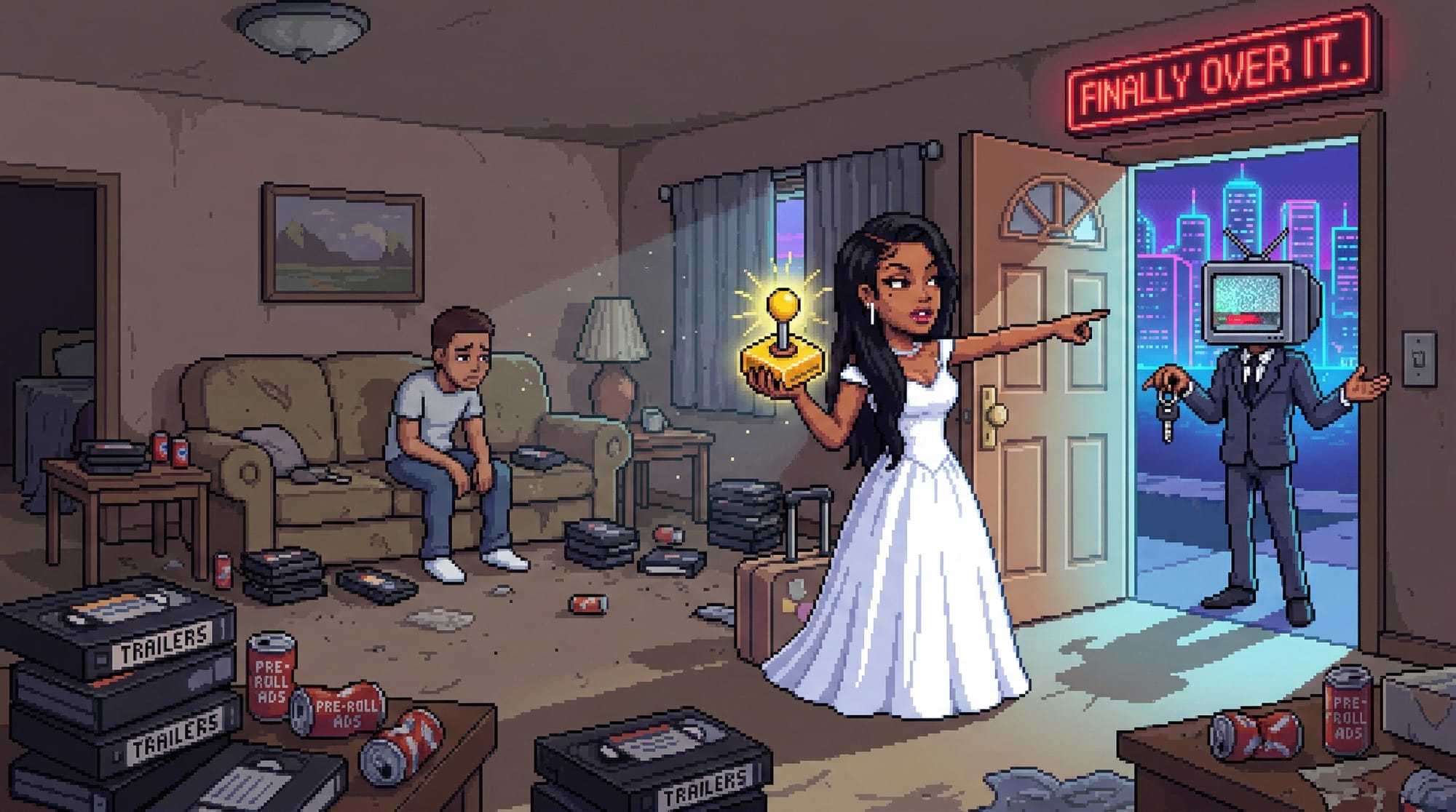
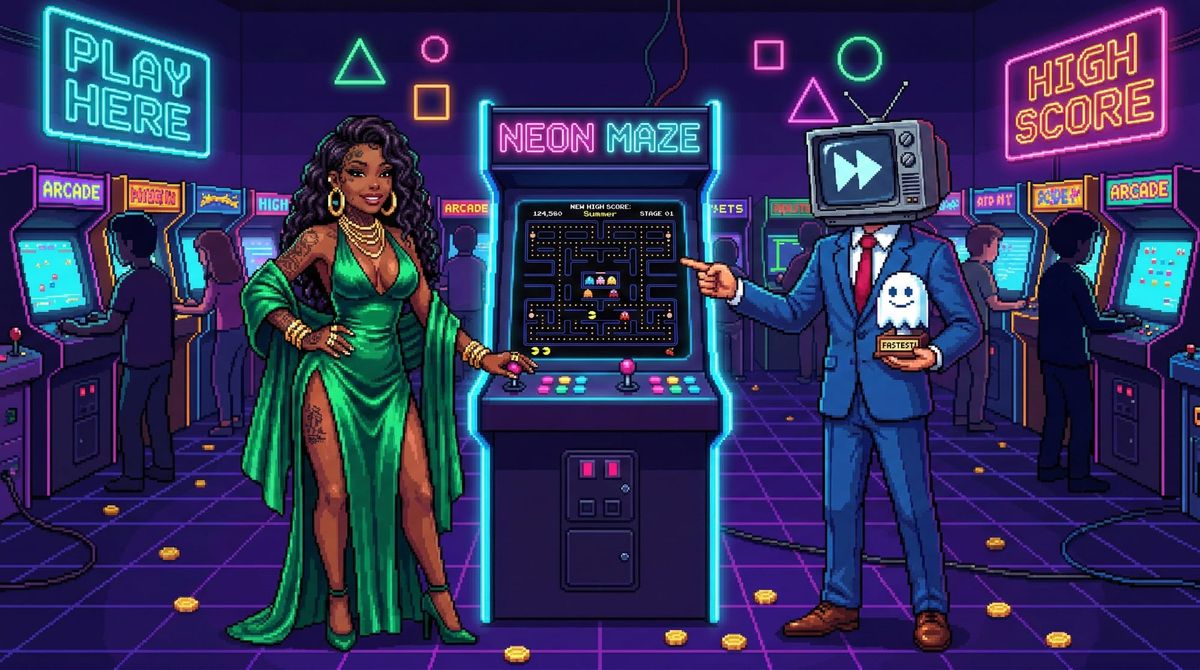
When R&B superstar Summer Walker launched her highly anticipated album Finally Over It, her team didn't just rely on standard music videos to drive engagement. They dropped a custom, Pac-Man-inspired video game directly onto her official website called "No Wac-Man". Players navigated a maze as a bride, dodging toxic men and red flags.
It was a masterclass in retention architecture. The genius wasn't in the game's graphical complexity—it was incredibly simple—but in its accessibility. It lives entirely in a web browser. There are no massive downloads, no console requirements, and no mandatory account creation just to hit "Start." It is lightweight, highly shareable, and dripping with nostalgia.
And do not mistake this for a niche play. The Entertainment Software Association (ESA) consistently reports that nearly 50% of the total gaming audience is female, while mobile analytics from Data.ai show that Gen Z and Millennials index incredibly high on hyper-casual and casual mobile games. Walker’s team didn’t force a gimmick; they precision-targeted the exact medium where her audience already spends their downtime.
The Phygital Ecosystem
Crucially, the digital game was just the top of the funnel. Walker's team bridged the digital-to-physical divide by launching a real-world "Finally Over It Escape Room" in Atlanta, complete with a branded dump truck for fans to literally throw away their toxic exes' belongings. She didn't just market a tracklist; she built an immersive, interactive world that fans could literally walk into.
This also isn't the first time Summer Walker has been on the frontline of innovation. I covered in Variety VIP+ in 2022 how she was mastering Sped Up versions of her songs made by fans on TikTok, releasing a Sped Up version of her album "Last Day of Summer" based on their popularity, something which many artists now do as part of the Fancam trend on TikTok.
The Data Behind Gamified Marketing
Why spend millions on a trailer when a retro web game performs exponentially better?
- The Attention Span: The analytics firm Adjust reports that the average user session for casual and hyper-casual mobile and web games consistently commands double-digit minutes of unbroken focus. Compare that hyper-focused attention to a 30-second YouTube pre-roll ad that a user immediately mutes or skips.
- The Engagement Multiplier: Integrating gamified elements into a marketing campaign has been shown to increase user engagement metrics by up to 150% compared to traditional advertising. Fans aren't just watching an ad; they are actively living inside the brand's digital ecosystem.
- The Bottom Line: According to Gallup research, fully engaged customers represent a 23% premium in share of wallet, profitability, revenue, and relationship growth over the average customer.
The Missing Executive Hook: First-Party Data & The OEM Grab
If a simple web game can generate that much sustained attention for an album, TV networks and streaming platforms are leaving money on the table by not doing the same. The 30-second spot is a rented audience; a gamified experience is an owned ecosystem.
Here is why this strategy is a mandatory upgrade:
- The First-Party Data Trojan Horse: In a post-cookie world, media buyers are terrified of losing tracking capabilities. Gamification solves this. When fans want to save their score on a leaderboard, they willingly hand over authenticated emails and Spotify data, turning a marketing expense into an owned database.
- The OEM CTV War: The battle for the living room has shifted. Major smart TV operating systems (OEMs) are desperately looking to increase the time users spend on their home screens to serve more ad inventory. They are leaning heavily into cloud gaming. But the industry's mistake is hyper-focusing on integrating expensive, complex AAA titles. The real unlock is simple, classic-style games. Tying simple HTML5 games to the smart TV home screen is a brilliant insight. OEMs are desperate for ad inventory, and you just handed them a low-friction solution. It transforms the television UI into a frictionless arcade, radically expanding ad exposure without requiring the user to buy a $70 game or wait for a massive download.
The Psychology of the "Playable Teaser"
Does a retro game actually build the right kind of hype? Absolutely. It builds a radically different type of excitement because it taps into what behavioral economists call the "IKEA Effect"—people place a disproportionately high value on things they partially create or earn.
When a fan just watches a trailer drop on Twitter, it's passive. When they have to beat a 16-bit boss to unlock secret content, they feel a sense of ownership over the content. They screenshot it. They brag about it. They share the code with friends. It transforms an audience from consumers into advocates.
The Boardroom Math: Pricing the Playable IP
If you are convinced by the psychology, the next question in the boardroom is always the same: How much will this cost? To anchor the reality: a premium, live-action 30-second promo trailer for a major TV series easily costs $150,000 to $500,000+ just for production, completely excluding the millions spent on the media buy to force people to watch it. Compared to that, building a high-retention HTML5 web game is a rounding error.
Here is the actual budget breakdown depending on your launch scale:
- Tier 1: The "Reskin" MVP ($5,000 – $15,000): You don't build a game from scratch; you license a white-label HTML5 template (like an endless runner) and pay a studio to swap out the art assets with your IP. Timeline: 2-4 weeks. Best for testing the waters.
- Tier 2: The Custom Arcade ($25,000 – $50,000): A custom-built, simple mechanic game (like No Wac-Man). This includes custom pixel art, unique level design, and crucially, database integration for a global leaderboard to capture first-party emails. Timeline: 1-2 months. Best for major album launches or tentpole TV premieres.
- Tier 3: The Bespoke Franchise ($60,000 – $120,000+): A fully custom, highly polished 16-bit game with unique mechanics (e.g., a playable sitcom fighting game). This requires custom hit-box coding, original chiptune music, and rigorous QA testing across hundreds of mobile devices. Timeline: 3-4 months. Best for massive IP cross-promotion and OEM smart TV integration.
(Note: Always allocate an extra 15% for the invisible infrastructure: server auto-scaling to prevent crashes if it goes viral, GDPR/CCPA legal compliance for data capture, and music licensing clearances).
How to Emulate the Strategy for TV and Film
- Embrace the "Retro" Budget: You don't need a massive AAA budget. Building a 1990s-style pixel art game is cost-effective, fast to produce, and universally understood by casual gamers.
- Own the Second Screen: 70% of your audience is already staring at their phone while your show plays. Stop fighting the distraction and co-opt it. Build lightweight, browser-based games that serve as real-time companion apps to the episodic broadcast.
- Gamify the Binge: Tie the gameplay directly to episodic progression. Imagine watching Episode 3 of a new streaming series, and the end credits reveal a QR code that unlocks a hidden level or a new character in the show's companion game. It turns passive consumption into an active, rewarding loop that prevents subscriber churn.
- The Pre-Launch Playable Teaser: Stop relying on a "Coming Soon" tweet to build hype months in advance. Bridge the agonizing gap between seasons or album drops by releasing a lightweight, browser-based game that acts as a playable trailer.
- For TV: Launch a 16-bit, side-scrolling "beat 'em up" where fans play as the show's main characters, battling through familiar locations from Season 1. Defeating the final boss unlocks the official release date or a private link to the Season 2 teaser.
- For Music: Build a "Choose Your Own Adventure" visual novel where the narrative paths are based on the lyrics of the artist's past hits. Fans who successfully navigate the story to the "true ending" are rewarded with a 60-second audio snippet of the upcoming lead single and a one-click button to pre-save the album on Spotify. You aren't just telling them the project is coming; you are making them earn it.
The Execution Risk (What You Must Warn Them About)
If you are consulting a media brand on this, you have to establish the guardrails, or they will ruin it.
- The Friction Trap: If a TV network tries this, their legal and marketing teams will try to force users to create an account, verify their email, and watch a 15-second sponsor video before the game even loads. That kills it instantly. The game must be zero-friction to start, saving the data-capture gate for the reward at the end.
- The Over-Engineering Trap: Execs will want 3D graphics and complex mechanics. You have to hammer home the "retro budget" point. It has to load instantly on a 4-year-old iPhone on a weak 5G connection.
Summer Walker already proved that fans will happily interact with your brand if you give them a joystick instead of a commercial. It’s time for the rest of the entertainment industry to level up.
[Click here to flip through the Executive Deck]
Stop buying ads. Start building ecosystems. If your marketing strategy still relies on hoping people don't skip your trailers, we need to talk. I help entertainment brands build high-retention, interactive launch strategies that actually convert.